
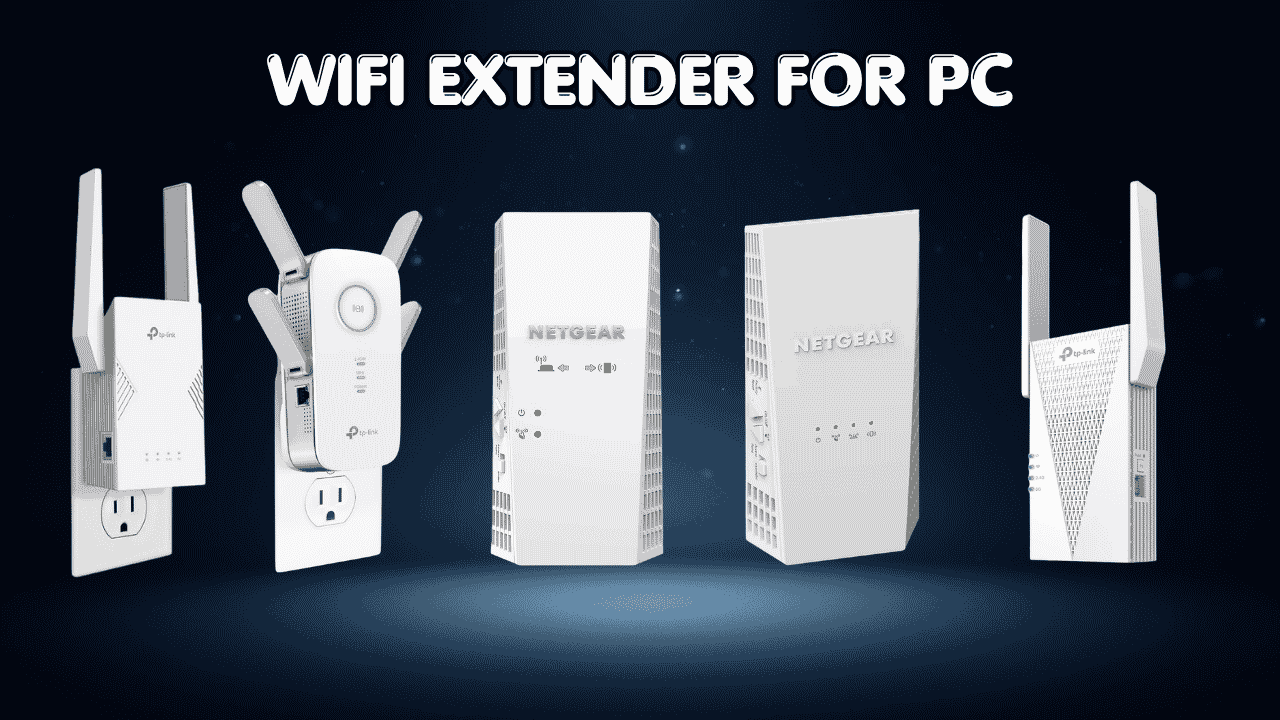

Nothing ends a gaming session faster than lag spikes, high ping, or random disconnects caused by weak WiFi coverage. If your gaming PC, PlayStation, Xbox, or Nintendo Switch is far from your router, a game wifi extender can eliminate that dead zone and bring a stronger, more reliable connection directly to your setup. The right extender makes a real, noticeable difference in ping stability, download speeds, and connection consistency during competitive play.
Modern gaming Wi-Fi extenders go well beyond just repeating signal. The best options support WiFi-6 and WiFi-7 for lower latency, Gigabit Ethernet ports for wired console connections, Smart Roaming that hands your device off seamlessly, and Easy Mesh integration so the extender becomes part of one unified network rather than a separate device you have to manually switch to.
Game WiFi Extender : 5 That Bring Fast, Stable WiFi to Your Gaming Setup
These extenders work with all major internet providers and routers including TP-Link, NETGEAR, ASUS, Spectrum, Xfinity, AT&T, Verizon Fios, Cox, and more. For the best gaming results, connect your console or PC via Ethernet to the extender’s port rather than relying on wireless, because wired always beats wireless for gaming latency. And if you’re also looking for family network management alongside gaming coverage, some of the options here work well in a variety of household setups, from gaming rooms to shared spaces running the extended family edition of a popular conquest game on separate devices.
Quick Top 5:
- TP-Link RE223BE (Best Overall WiFi 7 Game Extender)
- TP-Link RE715X (Best WiFi 6 Gaming Extender)
- TP-Link RE650 (Best for Wired Gaming Connections)
- NETGEAR EX6400 (Best for Smart Roaming Gaming Setups)
- NETGEAR EX7300 (Best Value NETGEAR Gaming Extender)
Why Your Gaming Setup Needs a Dedicated Extender
Distance and walls between your router and your gaming device create the exact conditions that cause lag and dropped connections. A game wifi extender placed between the router and your gaming room picks up a strong signal and rebroadcasts it where you actually need it. The result is lower ping, more stable connections during intense moments, and faster download speeds for large game updates.
Common mistakes gaming extender buyers make:
- Buying without an Ethernet port and then wondering why wired connection to the console isn’t possible
- Placing the extender too close to the router where the weak signal zone hasn’t started yet
- Choosing a WiFi 5 extender when their router is WiFi 6 capable and the gaming device supports it
- Expecting the extender to double as a full replacement for a better router when the real fix is router placement
Why modern gaming extenders solve the problem better than older hardware:
- WiFi 6 and WiFi 7 extenders deliver lower latency and better performance when multiple devices connect simultaneously
- Smart Roaming on NETGEAR models hands your device off without manual disconnecting or network switching
- EasyMesh on TP-Link models integrates the extender into a single network with the router so the console sees one SSID
- Gigabit and 2.5G Ethernet ports let gaming PCs and consoles bypass wireless entirely for the cleanest possible connection
Who this guide is for:
- Console gamers on PS5, Xbox Series X, or Nintendo Switch whose setup is far from the router
- PC gamers in rooms where WiFi signal drops below the quality needed for competitive play
- Households where someone games in a distant room while others stream and browse on the main network
- Anyone who has accepted lag as part of gaming but hasn’t yet tried a properly placed extender
This guide helps you find the right game wifi extender for your platform, home layout, and gaming priorities so you stop fighting your network and start playing better.
Top 5 Best Game WiFi Extenders
Disclosure: This post contains affiliate links. As an Amazon Associate I earn from qualifying purchases. If you purchase through our links, we may earn a small commission at no extra cost to you.
Every extender here was selected based on gaming-relevant features: Ethernet port availability, WiFi standard generation, coverage for typical gaming room distances, ease of setup, and real-world connection stability. Extenders without Ethernet ports were excluded because wired gaming connection is the most impactful upgrade any extender can offer.
#1 TP-Link RE223BE – Best Overall WiFi 7 Game Extender
Overview: WiFi 7 dual-band range extender with MLO, Ethernet port, and EasyMesh | Covers 2,400 sq. ft. and 64 devices | No 6GHz band | Best for gamers who want the latest WiFi 7 latency improvements with wired Ethernet connection capability | Compatible with all major routers and ISPs.
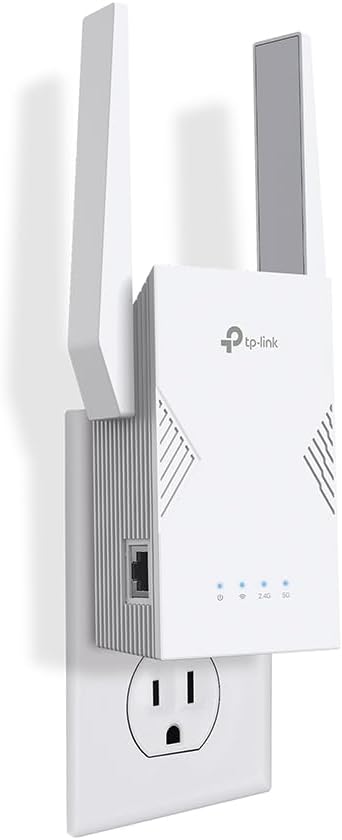
Key Benefits: MLO connects your gaming device across two bands simultaneously so signal weakening on one band doesn’t drop your connection or spike your ping | Ethernet port lets gaming PCs, PS5, Xbox Series X, and Switch docks connect via wire for the lowest possible latency | Easy Mesh integrates the extender into the same network as your TP-Link router so the console stays on one SSID | 64-device capacity handles the whole household alongside the gaming device | Easy setup via the TP-Link Tether app.
Pros: MLO is the most meaningful WiFi 7 latency improvement for gaming in a range extender | Ethernet port plus EasyMesh is the cleanest gaming extender setup available.
Cons: No 6GHz band means wireless gaming devices miss the cleanest WiFi 7 channel available on tri-band setups.
Best For: Gamers who want WiFi 7 performance and Ethernet connectivity from an extender | TP-Link router users who want EasyMesh whole-home coverage reaching the gaming room.
#2 TP-Link RE715X – Best WiFi 6 Gaming Extender
Overview: WiFi 6 AX3000 dual-band range extender with Ethernet port and EasyMesh | PCMag Editor’s Choice | Covers 2,400 sq. ft. and 64 devices | Best game wifi extender for proven WiFi 6 gaming performance with strong real-world latency and broad router compatibility | Works with all major routers and ISPs.

Key Benefits: AX3000 WiFi-6 delivers strong throughput and lower latency than WiFi-5 alternatives for gaming devices connecting wirelessly | Ethernet port provides a wired connection option for PS5, Xbox, gaming PC, or Nintendo Switch dock directly at the extender location | Easy Mesh creates a seamless single network so gaming devices don’t need to manually reconnect when moving through the home | PC Mag Editor’s Choice recognition reflects consistent real-world gaming and streaming performance | Tether app setup takes under five minutes.
Pros: PC Mag Editor’s Choice is a meaningful real-world validation for gaming use | WiFi-6 plus Ethernet is the ideal gaming extender combination at this price.
Cons: WiFi 6 rather than WiFi 7 means it misses MLO, though most gaming setups don’t yet require it.
Best For: Gamers who want proven WiFi-6 range extension with Ethernet connectivity | Households where the router is WiFi-6 and the extender should match the standard for best performance.
Want to compare these extenders against full gaming routers? Read our guide on the best wifi router at game to see how dedicated gaming routers compare against extender-based setups.
#3 TP-Link RE650 – Best for Wired Gaming Connections
Overview: WiFi 5 AC2600 dual-band extender with Gigabit Ethernet port, 4×4 MU-MIMO, and Access Point mode | Large coverage footprint | Best game wifi extender for gaming setups that need a Gigabit wired connection at the extender location | Works in extender or dedicated Access Point mode | Compatible with all major routers and ISPs.

Key Benefits: Gigabit Ethernet port delivers the fastest possible wired connection speed to the gaming device at the extender location, better than standard 100Mbps ports on cheaper extenders | Access Point mode turns the RE650 into a dedicated wireless access point rather than a repeater, which reduces the latency penalty that standard repeater mode adds | 4×4 MU-MIMO handles multiple gaming and household devices connecting simultaneously without slowing each device down | AC2600 dual-band speed provides solid throughput for gaming downloads and streaming.
Pros: Gigabit Ethernet port at this price is the best wired gaming value on this list | Access Point mode eliminates the repeater latency penalty for demanding gaming setups.
Cons: WiFi 5 AC standard is an older generation, so wireless devices miss the latency improvements WiFi 6 provides.
Best For: Gamers who prioritize Gigabit wired connection speed above wireless generation | Anyone willing to run an Ethernet cable to the extender location for the best possible console or PC connection.
#4 NETGEAR EX6400 – Best for Smart Roaming Gaming Setups
Overview: WiFi 5 AC1900 dual-band mesh range extender with Smart Roaming | Covers 2,100 sq. ft. and 35 devices | Up to 1.9 Gbps combined speed | Includes free expert setup help | Best game wifi extender for gaming households where devices move between rooms and Smart Roaming prevents the manual network switching frustration | Compatible with all major routers.

Key Benefits: Smart Roaming automatically connects your device to the strongest available signal between router and extender without requiring manual reconnection, which matters for households where gaming happens in different rooms | Mesh technology integrates with the existing network more cleanly than standard extender repeater setups | Free expert help from NETGEAR is included for gamers who want setup support during installation | AC1900 speed handles gaming, streaming, and general household browsing simultaneously | Simple WPS button setup or browser-based configuration.
Pros: Smart Roaming removes the manual network switching frustration that standard extenders create | Free expert help from NETGEAR lowers the setup barrier.
Cons: AC1900 is WiFi 5, so gaming devices with WiFi 6 capability won’t reach their full wireless potential through this extender.
Best For: Gaming households where players move between rooms and need seamless network handoff | First-time extender buyers who want free expert setup support from NETGEAR.
#5 NETGEAR EX7300 – Best Value NETGEAR Gaming Extender
Overview: WiFi 5 AC2200 dual-band mesh range extender with Smart Roaming | Covers 2,300 sq. ft. and 40 devices | Up to 2,200 Mbps combined speed | Best value NETGEAR game wifi extender for gaming households that want more coverage and device capacity than the EX6400 at a similar price tier | Compatible with all major routers and ISPs.

Key Benefits: AC2200 combined speed gives more wireless throughput headroom than the EX6400 for gaming households with higher download demand | 40-device capacity handles gaming devices alongside smart home, streaming, and phone connections without hitting a limit | Smart Roaming keeps gaming devices connected to the strongest signal automatically as players move through the home | 2,300 sq. ft. coverage suits most large gaming home setups from one extender unit | Mesh integration creates a more seamless network experience than standard repeater mode.
Pros: Higher speed and more device capacity than the EX6400 at a similar price | Smart Roaming and mesh integration make it a cleaner gaming network experience than basic extenders.
Cons: WiFi 5 AC2200 means gaming devices with WiFi 6 or WiFi 7 capability won’t benefit from the newer standards’ latency improvements.
Best For: Gaming households who want more wireless speed and device capacity than the EX6400 provides | Multi-device households where gaming, streaming, and smart home devices all need coverage in the same extended area.
Quick Comparison Table
| Rank/Model | WiFi / Speed | Coverage/Ethernet | Best For |
| #1TP-Link RE223BE | WiFi 7 / 3.2 Gbps | 2,400 sq. ft./Yes | WiFi 7 gaming with MLO |
| #2TP-Link RE715X | WiFi 6 / AX3000 | 2,400 sq. ft./Yes | Proven WiFi 6 gaming |
| #3TP-Link RE650 | WiFi 5 / AC2600 | Large/Gigabit | Best wired gaming port |
| #4NETGEAR EX6400 | WiFi 5 / AC1900 | 2,100 sq. ft./No | Smart Roaming gaming |
| #5NETGEAR EX7300 | WiFi 5 / AC2200 | 2,300 sq. ft./No | Value NETGEAR gaming |
This guide helps you choose the right game wi-fi extender based on your gaming platform, home layout, whether you need Ethernet, and which Wi-Fi standard your router and devices support.
What to Look for When Buying a Game WiFi Extender
Ethernet Port Is the Most Important Gaming Feature: For gaming, the Ethernet port on an extender is more valuable than any wireless speed rating. Connecting your PS5, Xbox, gaming PC, or Switch dock via Ethernet to the extender eliminates all wireless variables from your gaming connection and delivers the most consistent, lowest-latency path from your device to the router. If your gaming setup is in a room where a wired connection is possible, always prioritize an extender with a Gigabit Ethernet port.
WiFi Standard Matters for Wireless Gaming
- WiFi 5 (AC) extenders are functional but miss the efficiency improvements that help in multi-device households
- WiFi 6 (AX) extenders reduce latency and handle more simultaneous connections better, which shows up in gaming performance during peak household hours
- WiFi 7 (BE) extenders with MLO are the newest standard and deliver the most stable wireless connections for gaming devices that support the standard
Smart Roaming vs. Standard Repeater Mode
Standard extender repeater mode creates a separate network name that devices have to manually switch to. Smart Roaming on the NETGEAR models and EasyMesh on the TP-Link models both solve this by integrating the extender into a unified network. For gaming devices that move between rooms, Smart Roaming specifically prevents the manual reconnection frustration.
Coverage Area Matched to Your Home
- Under 1,500 sq. ft. to the gaming room? Any extender on this list covers it
- 1,500 to 2,300 sq. ft.? NETGEAR EX7300 or TP-Link RE715X are the right tier
- Up to 2,400 sq. ft.? TP-Link RE223BE or RE715X
How These Extenders Were Selected
Every extender here was evaluated specifically for gaming relevance: Ethernet port availability, WiFi standard generation, coverage for typical gaming room distances, Smart Roaming or EasyMesh integration, and ease of setup for non-technical gamers. Extenders without Ethernet ports that are useful for general home WiFi extension but limited for gaming-specific use were placed lower in the rankings. Real-world gaming latency impact, firmware support quality, and brand reliability shaped the final selections.
Key selection factors:
- Ethernet port presence and speed (Gigabit vs. standard)
- WiFi standard: WiFi 7 MLO, WiFi 6 AX, or WiFi 5 AC
- Smart Roaming or EasyMesh for seamless gaming network integration
- Coverage area for typical gaming room setups
- Device capacity for households where multiple people use the extended network
- Setup accessibility for gamers who want simple configuration
How to Get the Best Gaming Performance from Your WiFi Extender
Initial Setup for Gaming
- Place the extender halfway between the router and the gaming room before final positioning because signal strength in the middle is the correct starting point for optimization
- Update the extender’s firmware immediately after setup because gaming performance patches frequently arrive in early releases
- Connect the gaming console or PC via Ethernet to the extender’s port immediately after setup rather than testing wireless first
Placement That Actually Helps Gaming
- Find the spot where you have strong signal from the router and the extender can then push that strong signal into the gaming room
- Avoid placing behind the TV, in a cabinet, or on the floor because all three reduce the signal the extender can receive and rebroadcast
- For the TP-Link RE650 in Access Point mode, run an Ethernet cable from the router to the RE650 and place it in the gaming room itself for the cleanest possible connection
Mistakes That Add Ping
- Placing the extender in the gaming room where it receives a weak signal rather than between the router and the gaming room
- Using the extender’s wireless connection for gaming when an Ethernet cable to the extender’s port is available in the same room
- Running a WiFi 6 gaming device through a WiFi 5 extender instead of pairing it with the RE715X or RE223BE for proper WiFi 6 or WiFi 7 signal extension
- Not enabling EasyMesh on TP-Link models so the extender creates a separate network the gaming device has to manually switch to
Daily Gaming Tips
- Check the extender’s signal strength indicator monthly and reposition slightly if the router’s firmware update or furniture changes have affected the signal path
- Assign gaming consoles and PCs specifically to the 5GHz band on the extender for lower latency than 2.4GHz
- Restart the extender once a week if gaming ping feels inconsistent because connection table clearing keeps performance stable over time
Signs Your Gaming Extender Is Working Right
- In-game ping is lower and more consistent than before the extender was added
- Large game downloads from the gaming room finish faster than they did on direct WiFi
- Connection drops during gaming sessions disappear or become significantly less frequent
- Speed tests from the gaming device show speeds closer to your internet plan than they did without the extender
How to Pick the Right Game WiFi Extender
Need Ethernet for your console or PC? TP-Link RE223BE for WiFi 7, TP-Link RE715X for WiFi 6, or TP-Link RE650 for the fastest Gigabit port at the most accessible price. All three include Ethernet and are the right choice for wired gaming connections.
Want Smart Roaming for seamless network handoff? NETGEAR EX6400 or EX7300. Both include Smart Roaming that keeps gaming devices connected to the strongest signal automatically without manual switching. EX7300 gives more coverage and device capacity if the household is larger.
Router and device Wi-Fi standard: If your router and gaming device both support WiFi-6, the RE715X gives full WiFi-6 range extension. If your router supports WiFi-7, the RE223BE with MLO is the right pairing. If neither supports WiFi-6 or 7 yet, the AC extenders cover your current setup cleanly.
Must-have features for gaming extenders: Ethernet port, compatible WiFi standard, Smart Roaming or EasyMesh for seamless network integration, and coverage area that matches the distance between your router and gaming room.
Skip if: You’re buying a plug-in extender without an Ethernet port for a gaming console setup because you’ll have the extension coverage but still be gaming wirelessly rather than with the wired connection that makes the real latency difference.
Thinking about upgrading your whole gaming network instead of just extending it? Read our guide on the best WiFi 7 router for gaming to see how dedicated gaming routers compare to an extender-based approach.
Real User Feedback
- TP-Link RE223BE owners in gaming households say the MLO connection stability was immediately noticeable compared to their previous WiFi 5 extender, and that wiring the PS5 to the Ethernet port combined with MLO wireless coverage for other devices made it the most complete game wifi extender they’d used.
- TP-Link RE715X buyers with gaming PCs in distant rooms say the PC Mag Editor’s Choice designation matched their experience, and that Easy Mesh integration meant the gaming PC connected to the strongest signal automatically rather than staying locked to the router’s weaker signal in the far room.
- TP-Link RE650 users who ran Ethernet from the router to the RE650 in Access Point mode report that switching from repeater mode to AP mode was the single biggest gaming performance improvement they made, and that Gigabit wired speed from the extender to the gaming PC matched what they got directly from the router.
- NETGEAR EX6400 buyers say Smart Roaming solved the frustrating problem of gaming on a handheld or laptop that kept holding onto the router’s weaker signal in a far room instead of connecting to the closer extender’s stronger one.
- NETGEAR EX7300 gaming household users highlight the 40-device capacity as the practical reason they chose it over the EX6400, saying multiple family members gaming, streaming, and using smart home devices simultaneously no longer created the congestion slowdowns they experienced with a lower-capacity extender.
- Across all five extenders, gamers consistently report that placement at the midpoint between the router and the gaming room delivered better results than placing the extender in the gaming room itself, and that testing signal strength at several locations before finalizing the position made a meaningful difference in consistent gaming ping.
Alternatives Worth Considering
- TP-Link Deco BE65 Single Pack A full WiFi 7 mesh node rather than an extender, worth considering for gaming rooms where a dedicated node would give better performance than a repeater. Includes four 2.5G ports for wired gaming device connections.
- NETGEAR Orbi 770 Add-On Satellite For gamers whose primary router is the Orbi 770, adding a dedicated satellite to the gaming room provides better performance than any standalone extender.
- TP-Link RE715X in EasyMesh mode Worth using as a mesh node rather than a standalone extender if paired with a TP-Link WiFi 6 primary router for cleaner network integration.
- Powerline Adapter with WiFi An alternative approach to reaching a distant gaming room by running internet over the home’s electrical wiring. Worth comparing if the extender signal path has too many walls or floors between router and gaming room.
Conclusion and Final Recommendation
Lag doesn’t have to be part of your gaming experience. The right game wifi extender placed correctly between your router and your gaming room eliminates the dead zone causing the problem, and connecting your console or PC via Ethernet to the extender’s port delivers the cleanest, most consistent gaming connection possible. Every option on this list handles that job well for a different type of gaming setup.
This guide is for:
- Gamers whose setup is far from the router and who’ve been gaming on weak WiFi by default
- Console players who didn’t know the extender’s Ethernet port was the feature that would make the biggest difference
- Households comparing TP-Link and NETGEAR gaming extender options and wanting a clear recommendation
- Anyone who’s tried moving the router closer and still needed coverage support in the gaming room
Best overall pick: The TP-Link RE223BE is the strongest game wi-fi extender on this list. WiFi-7 with MLO, an Ethernet port for wired gaming connections, Easy Mesh integration, and 2,400 sq. ft. coverage make it the most future-ready and gaming-complete extender available. Wire your PS5, Xbox, or gaming PC to the Ethernet port and let MLO keep every other device connected more stably than any WiFi-6 or WiFi-5 extender can manage.
Short version: Pick an extender with an Ethernet port. Match the WiFi standard to your router. Place it halfway between the router and the gaming room. Wire the gaming device to the Ethernet port. Those four steps deliver more gaming performance improvement than any other single change you can make to a weak-signal gaming setup.